ARBORETUM/WOODY
PLANT DEMONSTRATION/RESEARCH AREA
The main
objectives of this demonstration garden are to determine which woody
plants are best suited for growing in the Rocky Mountain area and
display these plants for public and teaching purposes.
The arboretum
at PERC has the largest collections of woody plants in the region
with over 1,100 different taxa represented. Presently, a computerized
method for collection, storage, and retrieval of information on plant
performance has been implemented for all the woody plants in the arboretum.
This year, 55 different woody plants were donated from eight different
nurseries, arboreta, USDA, and other state experiment stations for
evaluation. All new bare root woody plants were containerized after
arrival. Shrub and tree species obtained this year are growing in
our lath house and/or greenhouse and eventually will be planted in
the various collections. Also, 57 different cultivars of crabapples
were planted in a replicated experiment at our Horticulture Research
Center in 1984 as part of a national program for evaluating crabapples
for fireblight resistance and 13 newer varieties were added in the
spring of 2004.

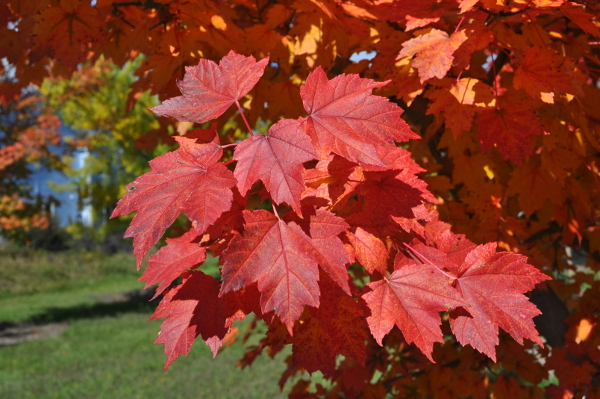
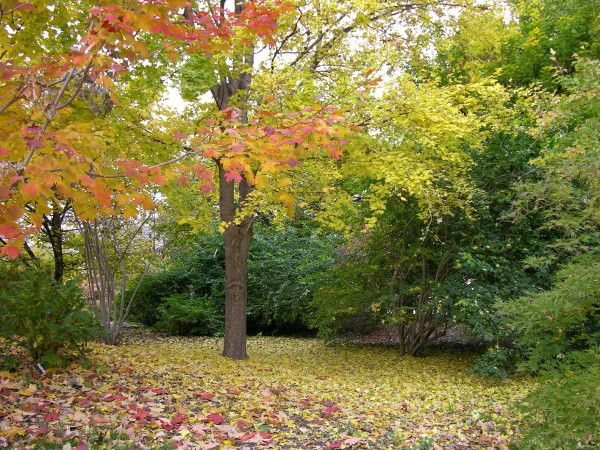
PERC arboretum in the fall.
The woody plant section is designed on a grid pattern, and exact permanent
locations of plant material have been determined and recorded. Most
plants in the arboretum are labeled, and each plant label has a trial
selection number, along with scientific and common names listed on
it. Display labels with scientific and common names have been placed
on one replication of each taxa throughout the arboretum this year
on the north side of the plant.
In
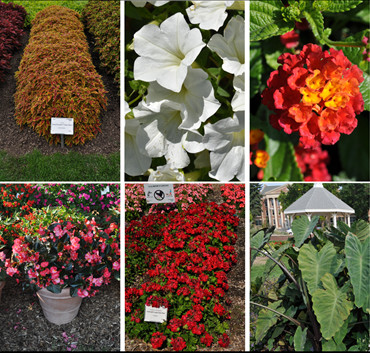
the southeast corner of the arboretum, a Plant Select® demonstration
garden is planted. In this planting current and future woody and herbaceous
Plant Select® endorsements, introductions or original plants are
planted. Plant Select® is a joint plant introduction program between
Colorado State University, Denver Botanic Gardens and the Green Industry
of Colorado.

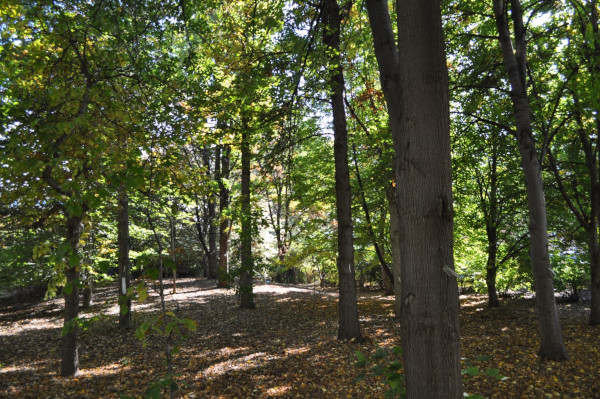
New arboretum area at Spring Creek in spring, summer and fall.
The woody plant demonstration/research area
is under the direction of Dr. James E. Klett.
David Staats (Research Associate) is in charge of record keeping for
this area in 2006.
In the spring of 2003, we lost approximately
one and one half acres of the arboretum for the construction of a
new dormitory on campus. The approximately 120 taxa of plants located
in this area were tree spaded to a new arboretum site off of Center
Avenue, north of Spring Creek and adjacent to the new City of Fort
Collins horticulture center (The Gardens at Spring Creek). These trees
are planted in rows by genus at the new site. In the Spring of 2005 seventeen different Elm cultivars were planted in order to find varieties that may be more resistant to Dutch Elm Disease. This is one site in the National Elm Trial program. Feel
free to visit this site and view first-hand these newer tree clones.
Approximately 49 new taxa were planted in the arboretum (both sites) in the spring of 2006.


Arboretum at the PERC in Spring.
A technical
bulletin entitled, "Woody Plants for the High Plains," discusses
this research from the past 12-15 years. Copies are available for
$10.50 from Colorado State University Cooperative Extension Resource
Center, 115 General Services Building, Fort Collins, CO 80523, 970-491-6198 (www.ext.colostate.edu).